Part of Weekend Classics: Beat The Heat
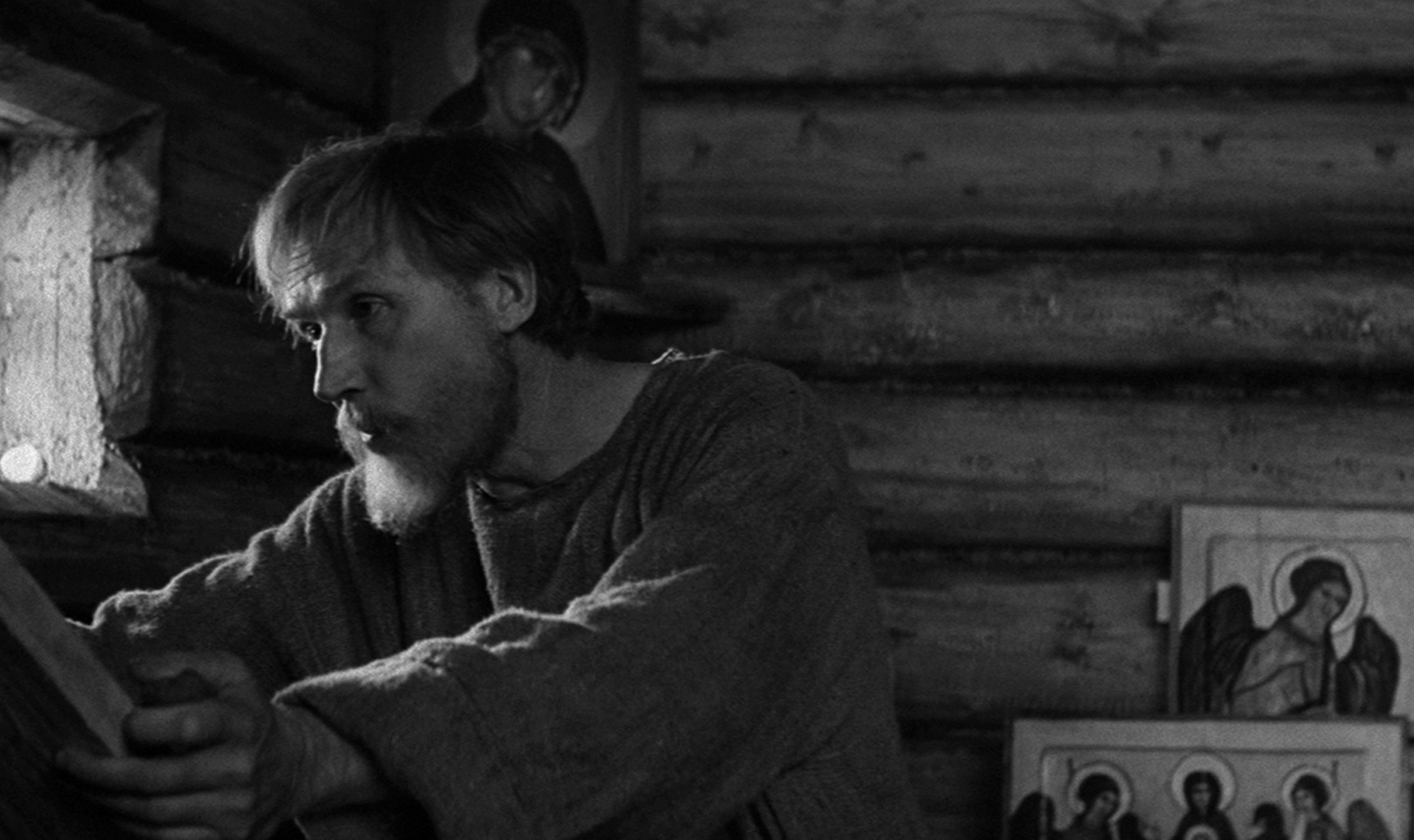
With his second feature, a towering epic that took him years to complete, Andrei Tarkovsky waded deep into the past and emerged with a visionary masterwork. Threading together several self-contained episodes, the filmmaker traces the renowned icon painter Andrei Rublev through the harsh realities of 15th century Russian life, vividly conjuring the dark and otherworldly atmosphere of the age — a primitive hot-air balloon takes to the sky, snow falls inside an unfinished church, naked pagans celebrate the midsummer solstice, a young man oversees the casting of a gigantic bell. Appearing here in Tarkovsky’s preferred 183-minute cut — the version that was originally censored by Soviet authorities — ANDREI RUBLEV is an arresting meditation on art, faith and endurance, and a powerful reflection on expressive constraints in the director’s own time.
“Solemn, magnificent, astounding: it's difficult to talk about Tarkovsky's Andrei Rublev without resorting to adjectives. It's even more difficult to get those adjectives to encompass the sheer majesty of this tremendous film…. Perfection lingers in each frame as Tarkovsky crafts one of the finest films ever made, an ecstatic story about art that has little interest in the artist himself, but in the power of art to transcend the age that produces it.” —Jamie Russell, BBC

“Some films achieve a masterpiece status that becomes unanimously agreed upon – something that's undoubtedly true of ANDREI RUBLEV, even though it's a film that people often feel they don't, or won't get…. In a sense, there is nothing to ‘get’ about Andrei Rublev. It is not a film that needs to be processed or even understood, only experienced and wondered at…. It is as close to transcendence as cinema gets.” —Steve Rose, The Guardian

“By the end of this majestically powerful film, we don’t just understand the need for art. We feel it, as Tarkovsky applies Rublev’s icons and frescoes like a balm to our bleeding souls.” —Elise Nakhnikian, Slant Magazine

“The Soviet censors immediately banned screenings of the movie, deciding that it was a negative commentary on the current political situation in the Soviet Union. As a result, it wasn’t shown uncensored to Russian audiences until 1988, after Tarkovsky’s death and the year of Rublev’s canonisation.” —Theodora Clarke, BFI