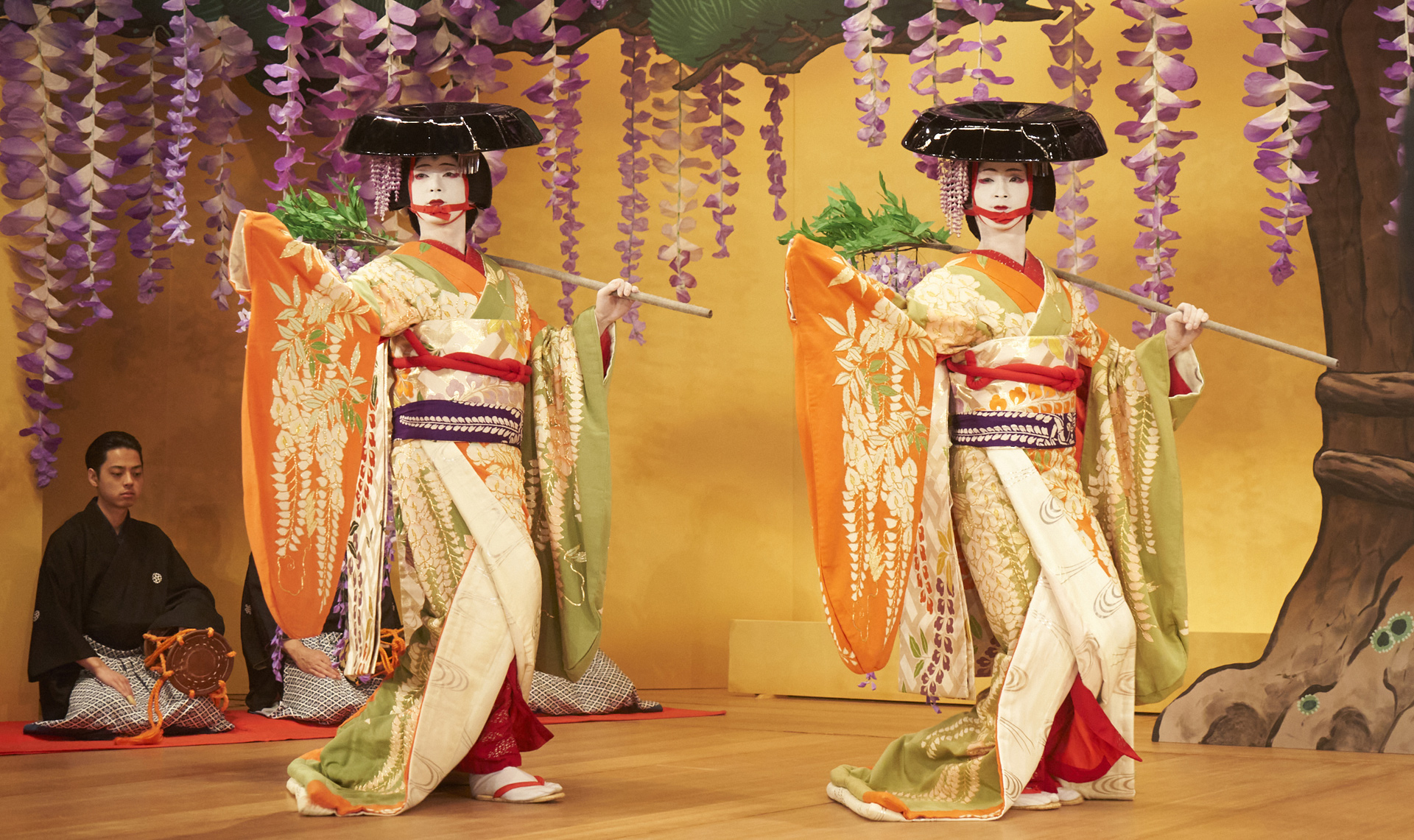
Nominated for the Academy Award® for Best Makeup and Hairstyling
An unexpected smash hit at the Japanese box office, KOKUHO is Lee Sang-il’s long-gestating passion project, born from a 15-year fascination with Kabuki and onnagata (men playing women on stage). When novelist Shūichi Yoshida — with whom Lee had previously collaborated — began serializing Kokuho, Lee recognized it as the perfect cinematic canvas to weave an irreplaceable story of heritage, cultural preservation and identity, shaped both on and by the stage.
KOKUHO opens in Nagasaki in 1964 and unfolds over five tumultuous decades. It follows Kikuo — the son of a slain yakuza boss — who, at 14, is taken in by a celebrated kabuki master and raised alongside Shunsuke, the master’s son and designated heir. Their bond — part brotherhood, part rivalry — drives an epic saga of ambition, sacrifice, scandal, and devotion, culminating in the emergence of a singular kokuho: a living “national treasure.”
Ryo Yoshizawa’s fully embodied turn as Kikuo (no doubles and no shortcuts — he trained for over a year) anchors the film, while Ryusei Yokohama’s Shunsuke provides the counterweight in a relationship charged with passion and tension.
Lee’s camera reveals kabuki as both exalted art and cutthroat business — built on hierarchies, family lineages, backroom politics and patriarchy — while deftly introducing the uninitiated into its codes and practices.
Visually sumptuous and emotionally piercing, Lee’s three-hour opus is neither boring nor didactic. It’s a meditation on inheritance and choice, tradition and reinvention, and the pursuit of artistic greatness — an epic told on an intimate, human scale. (Synopsis from the 2025 Toronto International Film Festival)
“At the center of its superb cast, Ryo Yoshizawa and Ryusei Yokohama deliver exquisitely layered performances that interweave offstage characterization and onstage theatricality.” —Sheri Linden, Hollywood Reporter

“Succeeds on multiple levels: as a character-driven drama, a cultural chronicle, and a meditation on legacy, sacrifice, and art. It may run long, but its emotional resonance, superb direction, and immersive kabuki sequences more than justify the scope. This is a richly crafted, deeply felt work that lingers long after the curtain falls.” —Panos Kotzathanasis, Asian Film Pulse