Part of Romance Is Dead
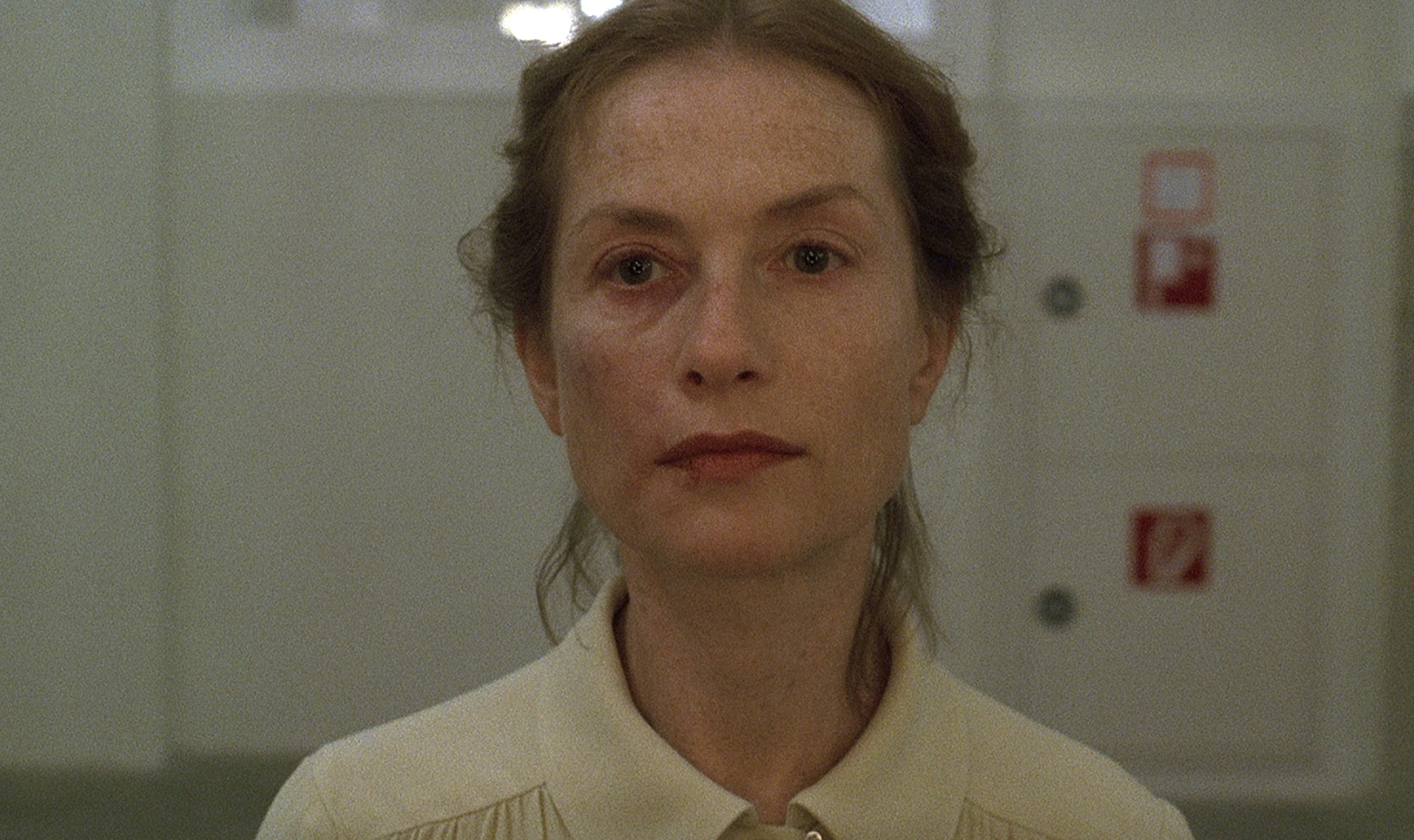
In this riveting study of the dynamics of control, Academy Award–winning director Michael Haneke takes on Nobel laureate Elfriede Jelinek’s controversial 1983 novel about perverse female sexuality and the world of classical music. Haneke finds his match in Isabelle Huppert, who delivers an icy but quietly seething performance as Erika, a piano professor at a Viennese conservatory who lives with her mother in a claustrophobically codependent relationship. Severely repressed, she satisfies her masochistic urges only voyeuristically until she meets Walter (Benoît Magimel), a student whose desire for Erika leads to a destructive infatuation that upsets the careful equilibrium of her life. A critical breakthrough for Haneke, THE PIANO TEACHER — which won the Grand Prix as well as dual acting awards for its stars at Cannes — is a formalist masterwork that remains a shocking sensation. (Synopsis courtesy of Criterion Collection)
“A genuinely shocking work…. THE PIANO TEACHER is a seriously scandalous work, beautifully made, and it deserves a sizable audience that might argue over it, appreciate it — even hate it.” —David Denby, New Yorker (Mar 25, 2002)

“Less like a fictional story than a tour through Freud's forgotten files…. THE PIANO TEACHER creates a hermetic, frightening world, and Huppert delivers a courageous performance as the woman around whom it ultimately falls apart.” —Ann Hornaday, Washington Post (May 23, 2002)

“The movie seems even more highly charged because it is wrapped in an elegant package. These are smart people. They talk about music as if they understand it, they duel with their minds as well as their bodies, and Haneke photographs them in two kinds of spaces: Sometimes they’re in elegant, formal conservatory settings, and at other times in frankly vulgar places where quick release can be snatched from strangers.” —Roger Ebert, Chicago Sun-Times (Apr 26, 2002)