Part of Weekend Classics: Robert Redford
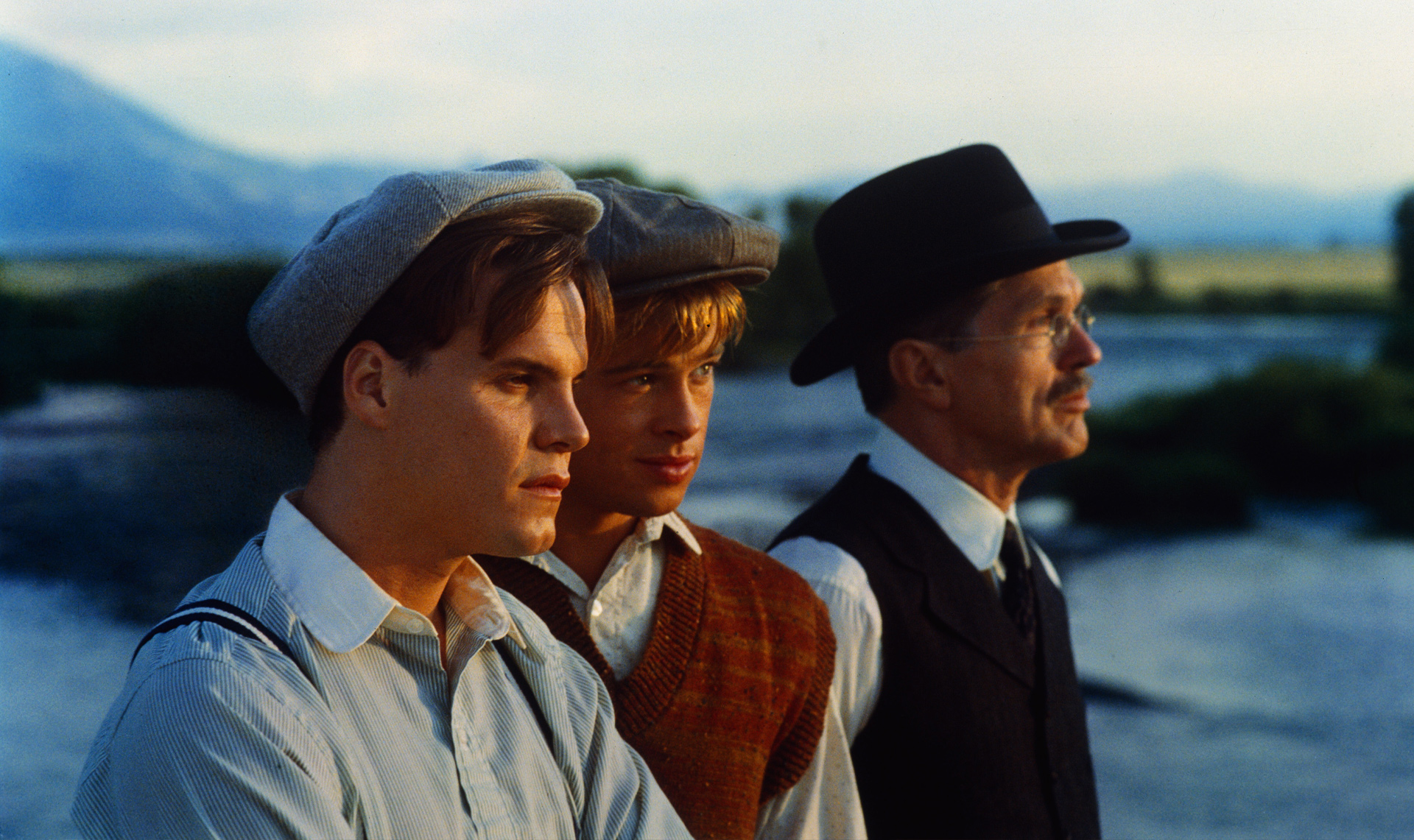
The Maclean brothers, Paul (Brad Pitt, in a pivotal early role) and Norman (Craig Sheffer), live a relatively idyllic life in rural Montana, spending much of their time fly fishing. The sons of a minister (Tom Skerritt), the boys eventually part company when Norman moves east to attend college, leaving his rebellious brother to find trouble back home. When Norman finally returns, the siblings resume their fishing outings, and assess both where they’ve been and where they’re going. Returning to the mountains much as he’d done with Sydney Pollack in Utah, Robert Redford directs Norman McClean’s semi-autobiographical novel in the bucolic splendor of Montana — and the fly-fishing industry of the early ‘90s exploded. (See also the Redford-directed ORDINARY PEOPLE)
“Here are two things I never thought I'd say: I like a movie about fly fishing, and Robert Redford has directed one of the most ambitious, accomplished films of the year. A RIVER RUNS THROUGH IT, Mr. Redford's beautiful and deeply felt new movie, puts him in an entirely new category as a film maker…. By the time the film arrives at its lyrical, elegiac end, it has earned all the feeling that comes pouring out. Mr. Redford's narration is straightforward and calm, allowing the poetry of Norman Maclean's written words to carry the emotion: ‘Eventually, all things merge into one, and a river runs through it.’ At last the Sundance Kid has grown up.” —Caryn James, New York Times (Oct 18, 1992)

“Redford’s film version makes the crucial decision to keep Maclean’s voice in the film; his own prose is read as a narration, by Redford, so that we do not simply see events as they happen, we are reminded that they are memories from long ago, and that the author has spent time and trouble to draw the lessons from them.” —Roger Ebert, Chicago Sun-Times (Oct 9, 1992)

“Robert Redford's A RIVER RUNS THROUGH IT is a loving work of embracing nostalgia for a brighter, cleaner, more upright America…. In its determination to emphasize character and thoughtful content over formulas and facile sensationalism, it's a movie that's proudly out of step with Hollywood trends.” —Hal Hinson, Washington Post (Oct 16, 1992)