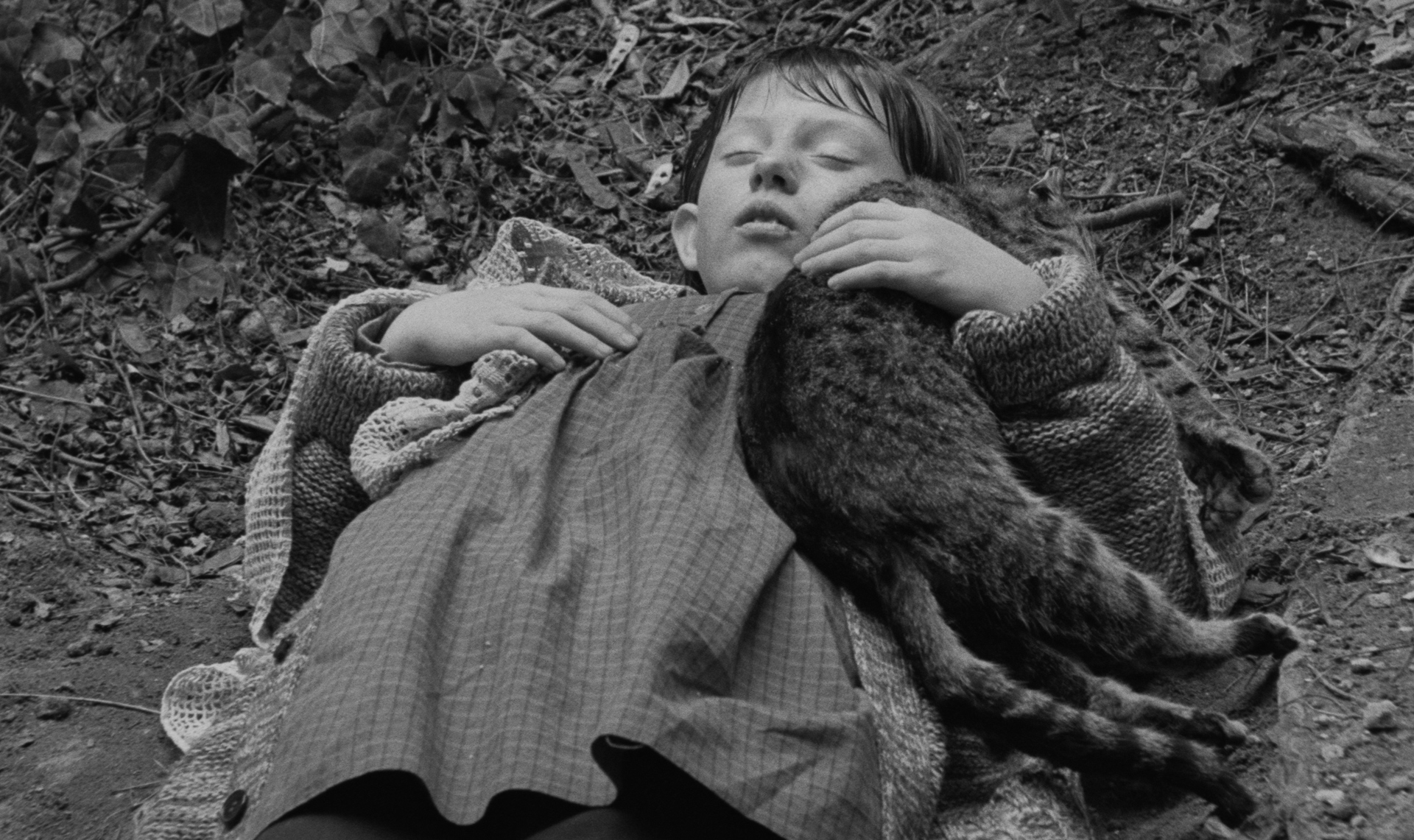
*Screening in three parts with one 15-minute intermission and one 25-minute intermission
Part of Milestones of the Last Quarter Century and Weekend Classics
“What’s black and white, speaks Hungarian, and is 37,204 feet long? Don’t look now, Nashville, but it will soon be in your midst. It is a phantom, a behemoth that only a comparative few have ever glimpsed. People have driven hours to see it and emerged half a day later from its company, changed. Some compare its effect to a drug. Others say it has the power to stop time. The harder it has been to see, the more its legend has grown. Spoken aloud, its name practically arrives in a clap of thunder: SÁTÁNTANGÓ!”
So wrote Jim Ridley in a 2006 hypepiece for Béla Tarr’s 1994 magnum opus. The 37,204 feet refers to the length of 35mm film that comprises what was at the time the only circulating English-subtitled print of Béla Tarr’s 7.5-hour magnum opus. He goes on: “There is no way to describe SÁTÁNTANGÓ that won’t make it sound like arthouse flagellation — at first, anyway. So let’s get the punishment out of the way. It is black-and-white (ouch!), subtitled (oof!), shot in glacial long takes (hit me again!) that might spend minutes on end surveying the movement of cows. Ooh, that smarts!”
Here’s the official synopsis from our pals at Arbelos Films, who’ve since assumed the heroic task of meticulously restoring SATANTANGO to 4K from the original 35mm negative, in case you need more:
In a post-apocalyptic landscape after the fall of communism, members of a small, defunct agricultural collective set out to leave their commune on the heels of a large financial windfall. As a few of the villagers secretly conspire to take off with all of the earnings for themselves, a mysterious character—long thought dead—returns to the village, altering the course of everyone’s lives forever.
A seminal work of “slow cinema,” Béla Tarr’s stunning adaptation of SÁTÁNTANGÓ unfolds in 12 distinct movements, alternating forwards and backwards in time, echoing the structure of a tango. Susan Sontag best described this masterful work of modern cinema when she wrote: “…Devastating, enthralling for every minute of its seven hours. I’d be glad to see it every year for the rest of my life.”
Section 1 = 2h 17m
15 min. Intermission (approx. 2:30pm–2:45pm)
Section 2 = 2h 4m
25 min. Intermission (approx. 4:50pm–5:15pm)
Section 3 = 2h 57m
Ending at approximately 8:15pm