With ROSE OF NEVADA, Mark Jenkin (ENYS MEN, BAIT) returns to the sea and to the uncanny. Set in a remote Cornish fishing village, the film opens with the unexplained reappearance of the vessel Rose of Nevada thought lost three decades prior. What follows is less a conventional mystery than a haunting, trance-like excavation of time, memory and collective disquiet, rendered in Jenkin’s unmistakable visual and aural languages.
Shot on 16mm using a wind-up Bolex and with all sound constructed in post-production, ROSE OF NEVADA hums with the ghostly purr of analogue media. The sea, constant and unknowable, becomes both setting and force — ancient, indifferent and ever-shifting. As the village responds to the boat’s return, buried tensions rise to the surface and the community itself begins to feel adrift.
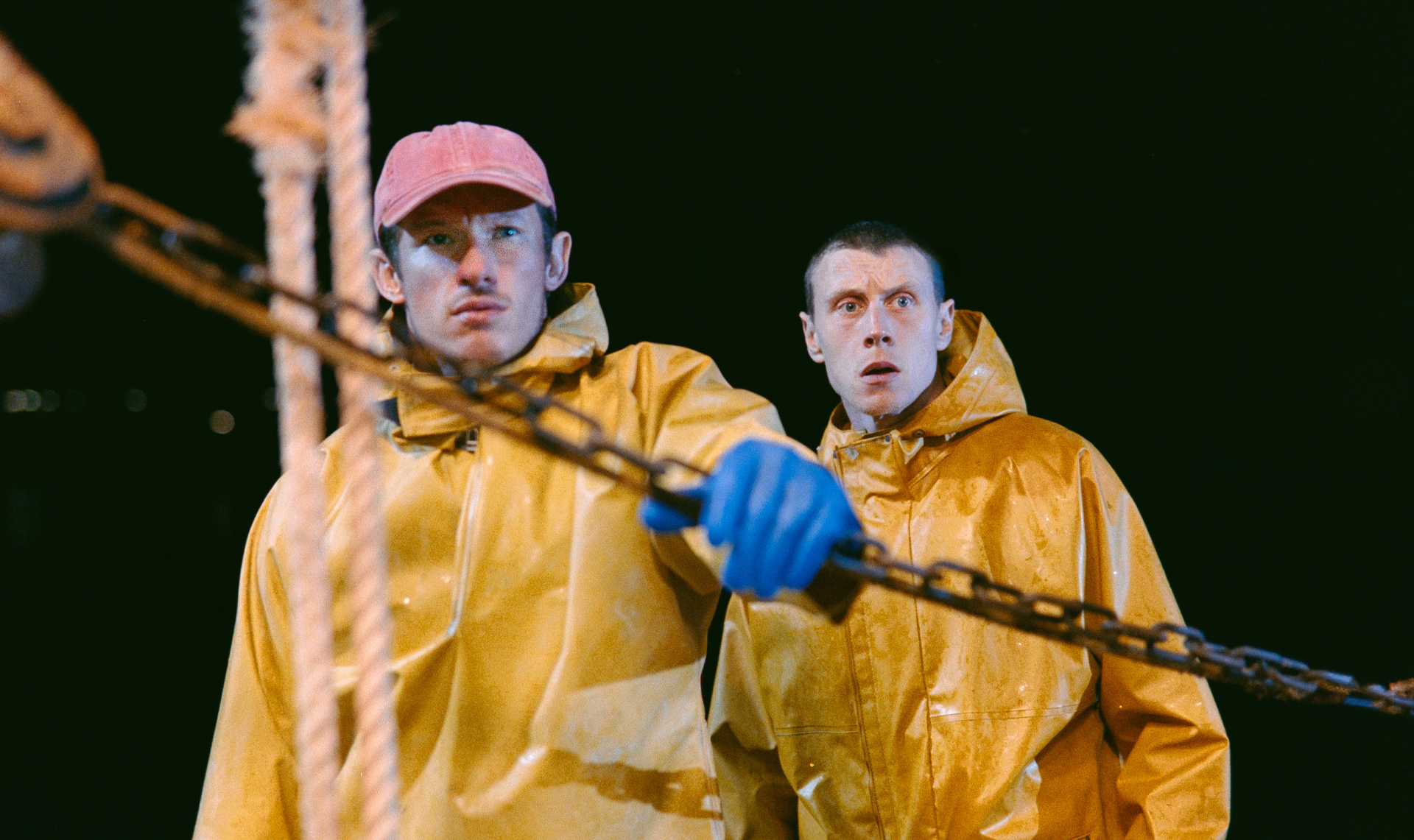
George MacKay and Callum Turner deliver quietly affecting performances as Nick and Liam, disparate men who sign on to crew the resurrected boat. Both evoke a sense of unease as the crew sails into uncertain waters, each man confronting the temporal displacement in his own way. Their performances enhance an atmosphere immersed in flickering light and dissonant soundscapes that seem to descend from another dimension.
Jenkin doesn’t offer easy answers. Instead, he immerses us in a world where the past refuses to stay buried and where the sea gives back only what it’s ready to. ROSE OF NEVADA is less a ghost story than a cinematic séance — a film about displacement, recursion, and the natural world’s refusal to forget. (Synopsis from the Toronto International Film Festival Program Guide)
“While most other filmmakers would have turned the choice to shoot on celluloid into an exercise in cinematic nostalgia, there is nothing stuffy about Jenkin’s approach… Jenkin isn’t just a stark outlier from the current media regime. He’s also among the very few working directors whose cinema feels both familiar and viscerally new.” —Leonardo Goi, Film Stage

“The film seals its one-man-band creator (who takes sole writing, directing, editing, lensing, scoring and sound design credit) as a distinctive, now eminently recognizable arthouse voice.” —Guy Lodge, Variety

“A crowning achievement of Jenkin’s work has been to find people whose faces mirror the refined textures of his films. Cracked noses and deep crevasses become a landscape as vast and complex as that of the director’s beloved home of Cornwall.” —Rafa Sales Ross, Little White Lies

A showtime with this icon means that screening will have open captions — a text display of the words, sounds, and speakers’ names in the movie, visible on the screen for everyone to see.